How Much Does a Yard of Road Base Weigh? A Practical Guide for Accurate Estimation
When planning a construction or landscaping project, one of the most common questions is: how much does a yard of road base weigh? Knowing this helps you estimate transportation, calculate load capacity, and order the correct amount of material.
The short answer is that one cubic yard of road base typically weighs between 2,700 and 3,000 pounds, or about 1.35 to 1.5 tons. However, the exact weight can vary depending on the type of material, moisture content, and compaction level.
This guide explains what affects road base weight and how to estimate it accurately for your project.
What Is a “Yard” of Road Base?
A “yard” refers to a cubic yard, which is a unit of volume equal to 3 feet × 3 feet × 3 feet (27 cubic feet).
When you order materials like road base flex base, suppliers typically sell them by the cubic yard or by the ton. Understanding the relationship between volume and weight is essential for proper planning.
Average Weight of Road Base Per Yard
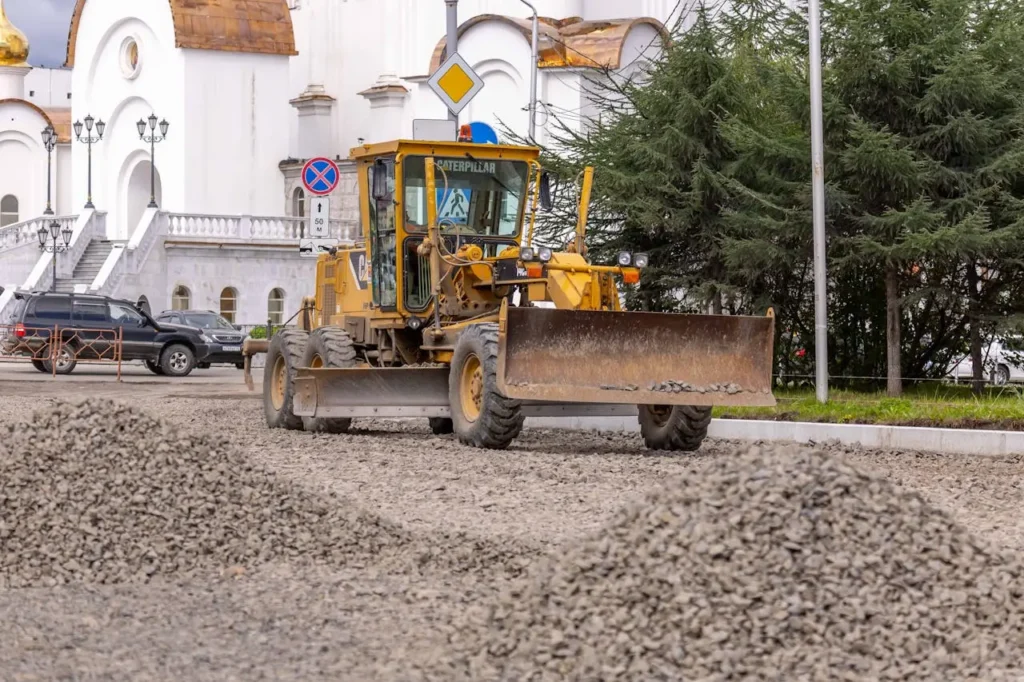
In most cases, road base falls within a consistent weight range due to its composition of crushed stone and fines.
- Loose road base: ~2,700 lbs per cubic yard
- Compacted road base: ~3,000 lbs per cubic yard
This means a standard dump truck carrying 10 cubic yards of road base may haul roughly 13.5 to 15 tons of material.
These values are widely used in construction estimates, but actual weight can vary slightly depending on conditions.
What Affects the Weight of Road Base?
Several factors can change how much a cubic yard of road base weighs in real-world situations.
Material Composition
Road base is made from a blend of crushed stone and fine particles. Materials such as limestone, granite, or recycled concrete can differ slightly in density.
For example, denser aggregates like crushed limestone may weigh more than lighter alternatives.
Moisture Content
Water adds weight. If the material is wet from rain or stored in humid conditions, it will weigh more than dry material.
Moisture also affects compaction, which in turn influences density.
Compaction Level
Loose material weighs less per cubic yard than compacted material because compaction reduces air gaps between particles.
Once installed and compacted, the same volume of road base becomes denser and heavier.
Particle Size Distribution
Well-graded material with a mix of large and fine particles compacts more tightly, increasing overall density and weight.
Why Weight Matters in Your Project
Understanding the weight of road base is important for several practical reasons.
It helps you calculate how much material you need, estimate delivery costs, and ensure your project site can handle the load.
For example, overloading a truck or underestimating material needs can lead to delays and additional expenses.
Accurate weight estimation also helps contractors plan compaction and layering more effectively.
How to Estimate Road Base for Your Project
To estimate how much road base you need, start by calculating the volume of the area.
Measure the length, width, and depth of the space, then convert it into cubic yards.
Once you have the volume, multiply it by the average weight per cubic yard (around 1.4 tons) to estimate total weight.
Adding 5–10% extra material is a common practice to account for compaction and minor variations.
Industry Standards and Practical Experience
In real-world construction, contractors rely on both standard density ranges and field experience when estimating road base weight.
Suppliers like Select Sand & Gravel provide consistent, high-quality materials that meet industry standards, helping ensure more accurate calculations and reliable performance.
If precise measurements are critical, especially for large-scale projects, it is always best to confirm weight specifications directly with your supplier.
Final Thoughts
So, how much does a yard of road base weigh? In most cases, it falls between 2,700 and 3,000 pounds per cubic yard, depending on material type and conditions.
Understanding this range helps you plan transportation, estimate costs, and ensure your project has the right amount of material.
By working with quality suppliers and accounting for real-world factors like moisture and compaction, you can make more accurate decisions and avoid costly mistakes in your construction or landscaping project.

