What Size Rock Is Best for a Gabion Basket?
Gabion baskets are widely used in erosion control, retaining walls, drainage systems, landscaping, and architectural features. However, the performance of a gabion structure depends heavily on choosing the correct rock size.
So, what size rock is best for a gabion basket?
In most applications, the ideal gabion rock size is 4 to 8 inches in diameter, although the exact size depends on the basket dimensions, project purpose, and engineering requirements. The rock should be large enough to stay inside the wire mesh while providing enough weight, stability, and drainage.
Using rock that is too small can cause material loss through the mesh openings, while using oversized rock can create unstable voids and make proper filling difficult.
Selecting the right gabion stone is not only about appearance—it directly affects the strength, durability, and long-term performance of the structure.
What Is Gabion Rock?
Gabion rock is a durable, angular stone placed inside wire mesh baskets to create a heavy, permeable structure.
A gabion basket typically consists of galvanized or coated steel wire cages filled with large rocks. Once filled, the baskets are connected together to form walls, channels, slope protection systems, or decorative landscape features.
Unlike solid concrete walls, gabions allow water to flow through the structure. The spaces between rocks provide natural drainage, reducing hydrostatic pressure behind retaining walls and helping control erosion.
Common materials used include:
- Granite rock
- Limestone
- Riprap stone
- River rock (for decorative applications)
- Other durable crushed stone materials
For structural applications, materials such as gabion rock are selected because they provide the necessary size, strength, and durability required for long-term performance.
Recommended Rock Size for Gabion Baskets
The most commonly recommended rock size for gabion baskets is:
4 to 8 Inch Rock
A 4–8 inch stone size range works well for many residential and commercial gabion applications because it provides a good balance between:
- structural stability,
- weight,
- drainage,
- and ease of installation.
These rocks are large enough to remain contained inside standard gabion mesh while creating a dense, stable fill.
However, the correct size may vary depending on the basket mesh opening.
A general rule used in gabion construction is:
The rock diameter should be approximately 1.5 to 2 times larger than the mesh opening.
This prevents smaller stones from escaping through the wire grid.
For example, if the gabion basket has a 3-inch mesh opening, rocks should generally be larger than 4 inches.
Why Rock Size Matters in Gabion Construction
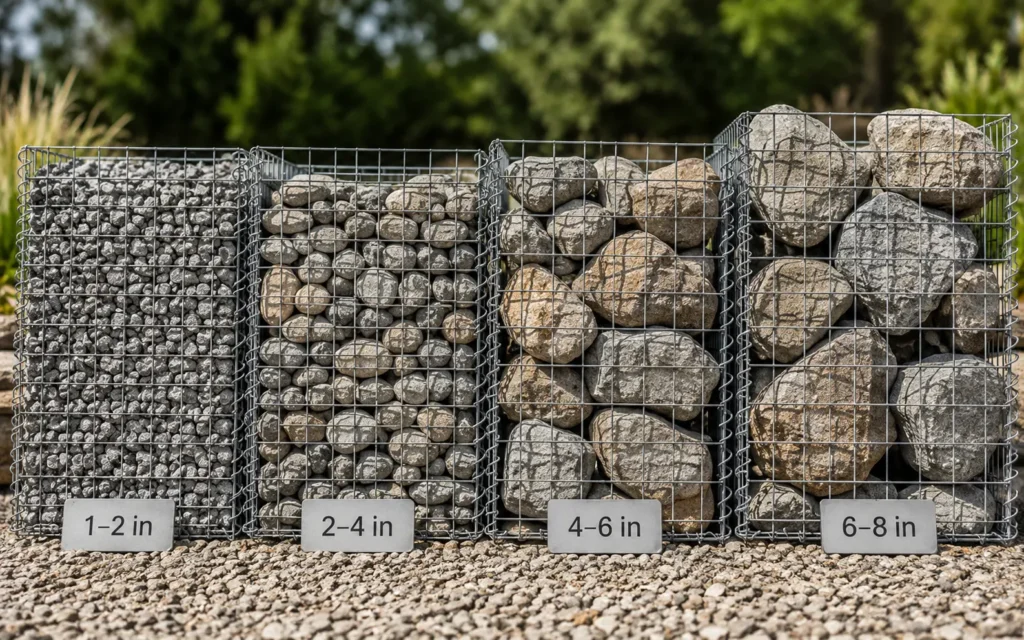
Rock size affects almost every aspect of gabion performance.
Structural Stability
Large rocks create weight and mass, which help gabion structures resist movement from soil pressure, water flow, and erosion.
A retaining wall made with properly sized stone can withstand significant pressure because the combined weight of the rocks and baskets creates a stable gravity structure.
If the stones are too small, the structure may become less stable because the material can shift more easily.
Drainage Performance
One of the biggest advantages of gabion walls is their ability to drain naturally.
The spaces between properly sized rocks allow water to pass through instead of building pressure behind the wall.
This is especially important for retaining walls because trapped water is one of the main causes of wall failure.
Rocks that are too small can reduce these drainage spaces by filling gaps excessively.
Durability
Gabion structures are designed to last for decades when built correctly.
The rock should be hard, weather-resistant, and capable of handling repeated exposure to moisture, temperature changes, and freeze-thaw cycles.
Soft or easily broken stones may deteriorate over time and reduce the effectiveness of the structure.
Best Types of Rock for Gabion Baskets
The best rock type depends on the project requirements, but durable angular stone is generally preferred.
Granite Rock
Granite is one of the most durable options for gabion baskets.
It has excellent resistance to weathering and provides a strong, long-lasting fill material.
Granite is commonly used for heavy-duty erosion control, river protection, and retaining structures.
Limestone Rock
Limestone is another commonly used gabion material.
It is widely available and provides good durability for many applications.
Crushed limestone products are frequently used in construction because of their strength and availability. However, the exact suitability depends on the specific project and environmental conditions.
Riprap Stone
Riprap is a popular choice for gabion baskets, especially in areas exposed to flowing water.
Riprap consists of large, durable stones designed to resist erosion caused by water movement.
Materials such as riprap stone are commonly used for:
- riverbanks,
- drainage channels,
- shoreline protection,
- and slope stabilization.
Can You Use River Rock in a Gabion Basket?
Yes, river rock can be used in gabion baskets, especially for decorative landscaping applications.
River rock provides a smooth, rounded appearance that many homeowners prefer for garden walls, outdoor features, and architectural designs.
However, rounded stones are generally less effective than angular rocks for structural applications.
Angular rocks lock together better, creating more friction and stability inside the basket.
For a decorative gabion wall, river rock may be an excellent choice. For erosion control or retaining walls, angular stone is usually preferred.
Gabion Rock Size for Different Applications
The ideal rock size depends on how the gabion basket will be used.
Gabion Retaining Walls
For retaining walls, larger angular rocks are usually preferred because they provide greater weight and stability.
A common range is approximately:
4 to 8 inches
or larger depending on engineering requirements.
Erosion Control
For stream banks, drainage channels, and slope protection, rock size is often determined by water velocity and soil conditions.
Larger stones may be required in areas exposed to strong water flow.
Materials like riprap are often selected for these demanding environments.
Decorative Gabion Features
For landscaping walls, benches, planters, and architectural features, appearance becomes more important.
Homeowners may choose:
- River rock
- Decorative granite
- Colored stone
- Larger landscape rock
The size may vary based on the desired visual effect and basket design.
How Much Rock Fits in a Gabion Basket?
The amount of rock needed depends on the basket dimensions.
Gabion baskets are typically calculated by volume:
Length × Width × Height = Cubic Volume
Because rocks have spaces between them, you usually need more material by weight than the exact basket volume might suggest.
The density of the stone also matters. Heavy rocks such as granite weigh more per cubic yard than lighter materials.
For accurate calculations, contractors typically consider:
- basket dimensions,
- rock density,
- project specifications,
- and installation requirements.
Common Mistakes When Filling Gabion Baskets
Using the wrong rock size is one of the most common mistakes.
Small stones may fall through the mesh or create excessive movement inside the basket.
Another mistake is using weak or weathered rock that breaks down over time.
Poor-quality wire baskets combined with unsuitable stone can significantly reduce the lifespan of the structure.
Proper installation also matters. Rocks should be placed tightly, with larger stones positioned strategically to create a stable structure.
Final Thoughts
So, what size rock is best for a gabion basket?
For most gabion applications, 4 to 8 inch durable, angular rock is the recommended size range because it provides the right combination of stability, drainage, and long-term durability.
However, the ideal stone size depends on the basket mesh opening, project purpose, environmental conditions, and structural requirements.
For retaining walls and erosion control, strong angular materials such as granite, limestone, or riprap are typically preferred. For decorative landscaping, appearance may influence the choice of stone more than structural performance.
Choosing the correct gabion rock and working with an experienced aggregate supplier like Select Sand & Gravel helps ensure your gabion structure remains stable, functional, and visually appealing for years to come.

