Decomposed Granite vs. Gravel: Which Is Better for Pathways
When designing a landscape pathway, choosing the right surface material is one of the most important decisions. A pathway needs to be attractive, comfortable to walk on, durable enough to handle weather and foot traffic, and suitable for the surrounding landscape.
Two of the most popular options for natural-looking pathways are decomposed granite (DG) and gravel.
So, which is better for pathways: decomposed granite or gravel?
The answer depends on how the pathway will be used, the desired appearance, maintenance expectations, drainage requirements, and budget. Decomposed granite is often the better choice for smooth, stable walking paths because it compacts into a firm surface, while gravel is usually preferred for areas where excellent drainage, affordability, and a more traditional crushed-stone appearance are priorities.
Both materials have advantages, and understanding their differences helps homeowners, landscapers, and contractors choose the right option for a long-lasting pathway.
What Is Decomposed Granite?
Decomposed granite, commonly called DG, is a natural material created as granite rock breaks down over time into smaller particles.
Unlike traditional gravel, decomposed granite contains a mixture of:
- Small granite fragments
- Fine mineral particles
- Stone dust
This combination allows DG to compact into a relatively firm surface while maintaining the natural appearance of stone.
Because of its fine texture and ability to create smooth pathways, decomposed granite is widely used for:
- Garden walkways
- Park trails
- Courtyard paths
- Landscape areas
- Outdoor living spaces
- Patio surfaces
Products such as decomposed granite are available in different grades, including standard DG and stabilized DG, depending on the project’s performance requirements.
What Is Gravel?
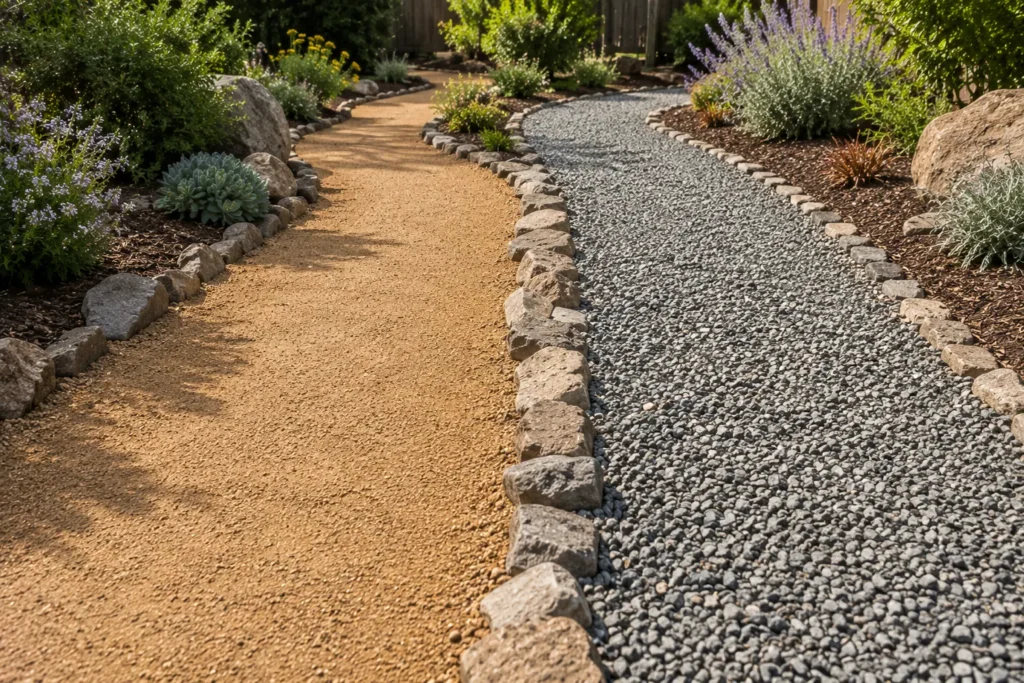
Gravel is a broad category of small rock fragments used in construction, landscaping, and drainage applications.
Unlike decomposed granite, gravel generally contains larger individual stones and does not usually include as much fine material.
Different types of gravel are available depending on the source and purpose, including:
- Crushed gravel
- Pea gravel
- Decorative gravel
- River gravel
- Landscape rock
For pathways, crushed gravel is often preferred because its angular edges interlock better than smooth stones, creating a more stable surface.
Materials such as pea gravel and other landscape rock products are commonly used for decorative pathways and outdoor areas.
Decomposed Granite vs Gravel: Quick Comparison
| Feature | Decomposed Granite | Gravel |
|---|---|---|
| Walking comfort | Smoother and more comfortable | Depends on gravel size and shape |
| Stability | Compacts into a firm surface | Can shift more easily |
| Drainage | Good, but less open than gravel | Excellent drainage |
| Appearance | Natural, elegant, compact stone look | Traditional loose stone appearance |
| Maintenance | Low with proper installation | May require occasional raking |
| Cost | Moderate | Usually lower |
| Best use | Walking paths, patios, landscaped areas | Drainage areas, budget pathways, driveways |
Which Is Better for Walking Paths?
For most pedestrian pathways, decomposed granite is often the better choice because it creates a smoother and more stable walking surface.
When properly installed and compacted, DG forms a firm surface that feels similar to a natural hardscape material. It is easier to walk on compared with loose gravel, especially for:
- Children
- Elderly individuals
- Wheelchair users
- People using strollers
The fine particles in DG fill the gaps between larger granite pieces, allowing the pathway to lock together.
However, standard gravel can also work well for pathways, especially when using properly sized crushed stone. The experience depends heavily on the gravel type.
Large, uneven rock can be uncomfortable, while smaller angular gravel creates a more stable walking surface.
Which Material Provides Better Drainage?
When it comes to drainage, gravel generally performs better than decomposed granite.
Gravel contains more open space between stones, allowing rainwater to move quickly through the pathway.
This makes gravel a good choice for:
- Areas with heavy rainfall
- Drainage-focused landscapes
- Low-lying areas
- Paths near gardens where water infiltration is important
Decomposed granite also provides drainage, but because it contains fine particles, it can become more compact and allow less water movement compared with loose gravel.
For projects where managing stormwater is the primary concern, gravel may have an advantage.
Which Is More Durable: DG or Gravel?
The durability of each material depends on installation quality and the environment.
A properly installed decomposed granite pathway can be very durable because the compacted surface resists movement.
However, heavy rain, steep slopes, or poor installation can cause erosion or washout.
Gravel pathways are also durable, but loose stones naturally move over time. Regular maintenance such as raking and adding additional material may be needed.
For high-use pedestrian areas, stabilized decomposed granite often provides better long-term performance because a stabilizing agent helps bind the particles together.
Learn more about stabilized decomposed granite for applications requiring improved surface strength.
Decomposed Granite vs Gravel Cost
Cost is often one of the deciding factors when choosing pathway materials.
In general, gravel is usually less expensive upfront because it requires less processing and is widely available.
Decomposed granite may cost more because it requires specialized processing to achieve the correct particle size and consistency.
However, the initial material cost is only part of the total project expense.
Installation costs may vary depending on:
- Excavation requirements
- Base preparation
- Delivery distance
- Compaction needs
- Pathway size
A cheaper material that requires frequent maintenance may not always be the most economical choice over the long term.
Which Looks Better: Decomposed Granite or Gravel?
Appearance is subjective, but the two materials create very different landscape styles.
Decomposed Granite Appearance
DG provides a refined, natural appearance similar to crushed stone.
It works especially well with:
- Modern landscapes
- Desert landscaping
- Native gardens
- Contemporary outdoor designs
Its compact surface creates a clean, finished look.
Gravel Appearance
Gravel provides a more traditional and textured appearance.
It works well for:
- Rustic gardens
- Cottage-style landscapes
- Driveways
- Informal walking paths
Decorative gravel options can add different colors and textures to landscape designs.
Does Decomposed Granite Get Muddy?
One concern homeowners often have is whether decomposed granite becomes muddy after rain.
Standard DG can become muddy or develop erosion problems if it is installed incorrectly or placed in areas with poor drainage.
Proper installation usually includes:
- Preparing a stable base
- Installing the correct depth
- Compacting the material properly
For areas exposed to frequent rain or heavy use, stabilized DG can provide improved performance.
Does Gravel Require More Maintenance Than Decomposed Granite?
Both materials require some maintenance, but the type of maintenance is different.
Gravel pathways may require:
- Raking displaced stones
- Adding new gravel periodically
- Removing weeds
- Filling low areas
Because loose stones naturally move, maintenance is expected over time.
Decomposed granite typically requires less surface movement maintenance but may need occasional:
- Regrading
- Adding fresh DG
- Recompaction
- Repairing erosion areas
A well-installed pathway will always require less maintenance regardless of material choice.
Can You Use Both Decomposed Granite and Gravel Together?
Yes. Combining DG and gravel can sometimes provide the benefits of both materials.
For example, some landscape designs use gravel as a decorative border while using DG as the main walking surface.
Another approach is using a gravel base underneath decomposed granite to improve drainage and stability.
The right combination depends on the pathway design and site conditions.
How Deep Should Decomposed Granite or Gravel Be for a Pathway?
The recommended depth depends on soil conditions and expected use.
For pedestrian pathways:
- Decomposed granite is commonly installed around 3–4 inches deep
- Gravel pathways are often installed around 3–6 inches deep
A compacted base may be required, especially in areas with poor soil or heavy traffic.
Using quality base materials such as road base flex base underneath can improve stability and reduce settling.
Which One Should You Choose for Your Pathway?
Choose decomposed granite if you want:
- A smoother walking surface
- A more finished landscape appearance
- Less loose material movement
- A natural stone look similar to a compacted path
Choose gravel if you need:
- Maximum drainage
- A lower upfront cost
- A traditional loose stone appearance
- A traditional loose stone appearance
Neither material is universally better. The right choice depends on the purpose of the pathway and the conditions of the site.
Final Thoughts
The difference between decomposed granite and gravel for pathways comes down to stability, drainage, appearance, and maintenance.
Decomposed granite is usually the better option for comfortable walking paths because it compacts into a firm, attractive surface. Gravel is often the better choice where drainage, affordability, and easy installation are the main priorities.
For homeowners and contractors, the most important factor is not only selecting the right material but also installing it correctly. Proper grading, a stable base, adequate depth, and quality aggregate will determine how well the pathway performs over time.
Select Sand & Gravel supplies quality landscaping materials, including decomposed granite, gravel, and other aggregates, helping customers create durable and attractive pathways throughout Texas and surrounding areas.

