What Kind of Sand Goes Between Brick Pavers? A Complete Guide to Choosing the Right Joint Sand
When installing a brick patio, walkway, or driveway, many people focus on the pavers themselves and the base underneath. However, the material that fills the joints is just as important for the long-term stability and appearance of the project. If you are wondering what kind of sand goes between brick pavers, the answer depends on the type of installation, traffic level, and maintenance expectations.
Joint sand helps lock pavers together, prevents movement, reduces weed growth, and allows proper drainage. Choosing the wrong type of sand can lead to washout, weed issues, insect infestation, or unstable pavers over time.
This guide explains the most common types of sand used between brick pavers and which option works best for different applications.
Polymeric Sand: The Most Popular Option
Polymeric sand is one of the most widely recommended materials for filling joints between brick pavers. It is made of fine sand mixed with polymer additives that harden when activated with water.
Once cured, polymeric sand creates a firm bond that helps keep pavers locked in place. It reduces weed growth, prevents ants and insects from nesting in the joints, and resists erosion from rain or washing.
Because it hardens while remaining slightly flexible, polymeric sand can handle minor movement caused by temperature changes or traffic.
For patios, walkways, and driveways where long-term durability is important, polymeric sand is often considered the best option.
Regular Joint Sand or Mason Sand
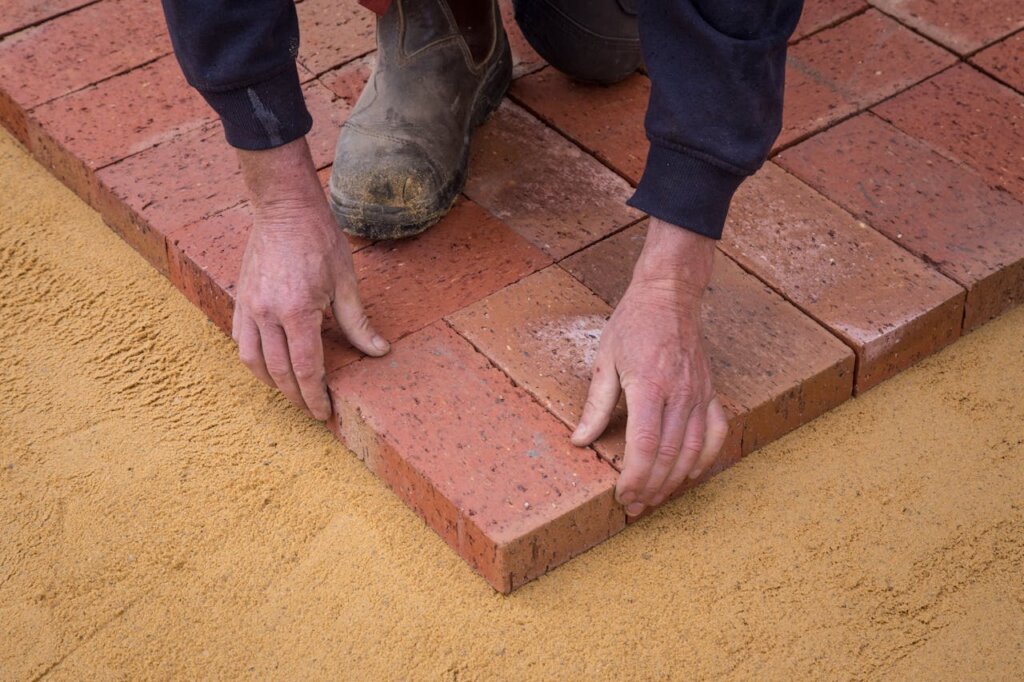
Regular joint sand, often referred to as mason sand, is another common option. Mason sand is finely screened and has a smooth, consistent texture.
It sweeps easily into joints and allows good drainage. However, unlike polymeric sand, it does not harden. This means it can wash out over time and may need periodic refilling.
Mason sand is often used in budget-friendly installations or projects where flexibility and easy maintenance are preferred.
For projects requiring high-quality sand, properly graded sand products can improve installation results and long-term performance.
Bedding Sand Is Not Joint Sand
A common mistake is confusing bedding sand with joint sand.
Materials such as utility and bedding sand are used underneath pavers as a leveling layer, not between the joints. Bedding sand helps create a smooth, stable surface before pavers are laid.
Because bedding sand is not designed to harden or remain in exposed joints, using it between pavers can lead to washout and instability.
It is important to use the correct sand for each layer of the installation.
Stone Dust or Screenings
In some installations, stone dust or screenings are used as joint material. These are fine particles produced from crushed stone.
Stone dust can compact tightly and create a firm surface. However, it may not drain as well as sand and can become muddy in wet conditions.
For this reason, stone dust is less commonly used in modern paver installations, especially in areas with heavy rainfall.
Factors to Consider When Choosing Joint Sand
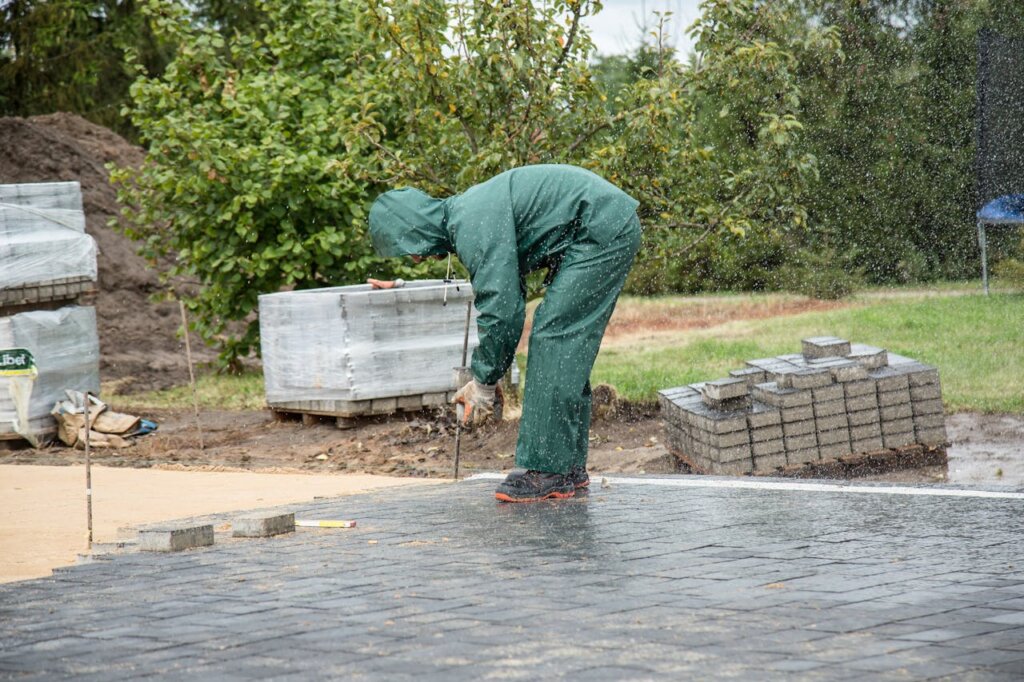
The best type of sand depends on the project’s specific needs.
For high-traffic driveways or patios exposed to weather, polymeric sand offers better durability and weed resistance.
For low-traffic areas or projects where easy replacement is preferred, mason sand may be sufficient.
Drainage is another important factor. If water retention is a concern, the joint material should allow moisture to escape while still maintaining stability.
Climate also matters. Areas with heavy rain or freeze-thaw cycles often benefit from polymeric sand because it resists erosion better than loose sand.
Why the Base Material Matters Too
Even the best joint sand will not perform well if the base beneath the pavers is unstable.
A proper base typically includes compacted aggregate materials such as road base flex base or crushed limestone, followed by a bedding sand layer.
This layered system provides structural support and ensures the pavers remain level over time.
Without a stable base, joints may crack or wash out due to movement.
Final Thoughts
Understanding how to calculate cement and sand in brick masonry is essential for efficient construction planning. By calculating wall volume, estimating mortar requirements, and applying the correct mix ratio, you can determine material quantities accurately and reduce unnecessary costs.
Accurate estimates not only improve budgeting but also ensure smooth project execution. Using high-quality materials from trusted suppliers like Select Sand & Gravel further improves the strength and durability of masonry work.
Whether you are building a small wall or a large structure, careful calculation and proper material selection are key to long-lasting results.

