How to Calculate Cement and Sand in Brick Masonry: A Practical Guide for Accurate Material Estimation
Accurate material estimation is one of the most important parts of any masonry project. Whether you are building a boundary wall, home extension, or commercial structure, knowing how to calculate cement and sand in brick masonry helps reduce waste, control costs, and ensure proper planning.
Brick masonry requires mortar to bond bricks together, and mortar is primarily made of cement and sand. Calculating the right quantity depends on wall dimensions, brick size, mortar thickness, and the mortar mix ratio used on the project.
This guide explains the process step by step so contractors, builders, and homeowners can estimate materials more accurately.
Understanding Brick Masonry Volume
The first step in calculating cement and sand is determining the total volume of brickwork.
Brick masonry volume is calculated by multiplying the length, height, and thickness of the wall.
For example, if a wall is 10 feet long, 8 feet high, and 9 inches thick, the calculation would be:
10 × 8 × 0.75 = 60 cubic feet
This total volume includes both bricks and mortar.
To achieve accurate results, measurements should always be converted into the same unit before calculation.
Calculating the Number of Bricks
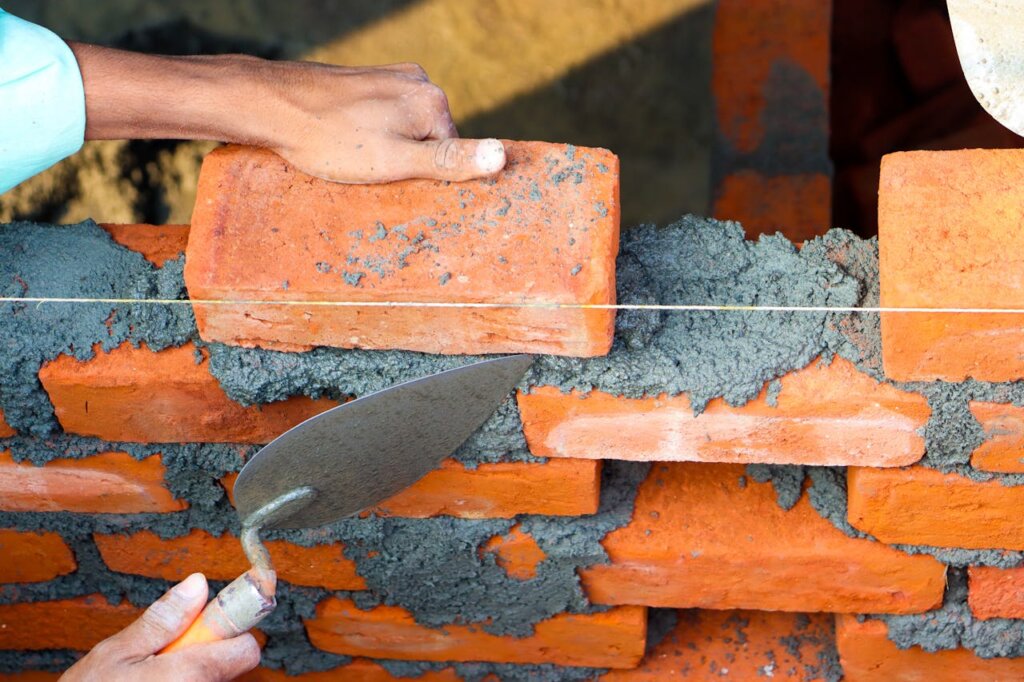
Once the wall volume is known, the next step is estimating the number of bricks.
A standard brick size may vary by region, but a commonly used brick size with mortar is approximately 8 inches × 4 inches × 4 inches.
The volume of one brick with mortar is calculated and then divided into the total wall volume.
This helps determine how many bricks will be needed for the project.
After calculating brick quantity, the remaining volume can be considered mortar volume.
Calculating Mortar Volume
Mortar generally makes up about 20% to 30% of the total brick masonry volume, depending on brick size and joint thickness.
A common rule of thumb is to take 30% of the brickwork volume as wet mortar.
For example, if the wall volume is 60 cubic feet:
60 × 30% = 18 cubic feet of wet mortar
To convert wet mortar into dry volume, multiply by approximately 1.33 because dry materials expand.
18 × 1.33 = 23.94 cubic feet dry mortar
This dry mortar volume will be used to calculate cement and sand.
Calculating Cement and Sand Based on Mix Ratio
Mortar is mixed in different ratios depending on the strength required. One common ratio for brick masonry is 1:6, meaning 1 part cement and 6 parts sand.
The total parts in this ratio are 7.
For cement:
23.94 ÷ 7 = 3.42 cubic feet
For sand:
23.94 × 6 ÷ 7 = 20.52 cubic feet
This means for the example wall, you would need approximately 3.42 cubic feet of cement and 20.52 cubic feet of sand.
If converting cement into bags, one bag of cement is approximately 1.25 cubic feet.
3.42 ÷ 1.25 = 2.74 bags
So you would need about 3 bags of cement.
Why Sand Quality Matters in Brick Masonry
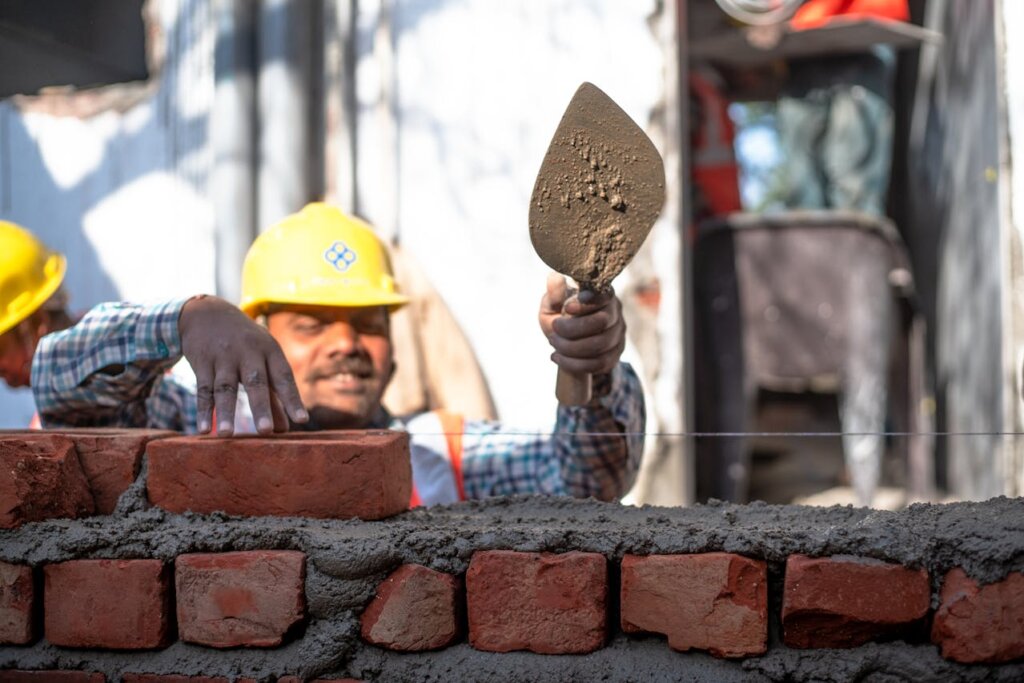
The strength and workability of mortar depend heavily on the quality of the sand used.
Fine, clean sand improves bonding and creates a smoother mortar mix. Poor-quality or contaminated sand can weaken the structure and cause cracking over time.
For masonry projects, using reliable sand products ensures better consistency and stronger results. In some cases, materials like brick sand or concrete sand may be used depending on the application.
Choosing the correct sand type is just as important as calculating the correct quantity.
Common Mistakes in Material Calculation
One common mistake is ignoring mortar joint thickness. Thicker joints increase mortar usage significantly.
Another issue is not converting wet mortar volume into dry volume before calculating materials. This can result in underestimating both cement and sand.
Wastage should also be considered. It is common practice to add 5% to 10% extra material to account for handling losses and unexpected adjustments during construction.
Proper planning helps avoid delays and additional transportation costs.
Final Thoughts
Understanding how to calculate cement and sand in brick masonry is essential for efficient construction planning. By calculating wall volume, estimating mortar requirements, and applying the correct mix ratio, you can determine material quantities accurately and reduce unnecessary costs.
Accurate estimates not only improve budgeting but also ensure smooth project execution. Using high-quality materials from trusted suppliers like Select Sand & Gravel further improves the strength and durability of masonry work.
Whether you are building a small wall or a large structure, careful calculation and proper material selection are key to long-lasting results.

