Can I Use Cushion Sand for Lawn Leveling? Pros, Cons, and Better Alternatives
Lawn leveling is one of the most effective ways to improve drainage, eliminate uneven patches, and create a smooth, healthy yard. But when it comes to choosing the right material, many homeowners face a practical question: can I use cushion sand for lawn leveling instead of mason sand?
The short answer is yes—you can use cushion sand. But whether you should use it depends on your goals, soil condition, and expectations.
This guide breaks down the real differences, including performance, cost, and long-term results, so you can make an informed decision instead of just following common advice.
What Is Cushion Sand and How Does It Behave on Lawns?
Cushion sand is a natural, relatively unprocessed sand that contains a mix of fine and slightly coarse particles. It is commonly used for base preparation, bedding, and general fill applications.
Materials like cushion sand are valued because they are affordable and easy to spread. However, they are not specifically designed for turf applications.
When applied to a lawn, cushion sand tends to compact more tightly than finer sands. It can fill low spots effectively, but it does not always integrate smoothly with existing soil, especially in grass-heavy areas.
This is where the difference between “works” and “works well” becomes important.
Why Most People Use Mason Sand for Lawn Leveling
Mason sand is commonly recommended for lawn leveling because of its fine, consistent texture. It spreads evenly, blends better with soil, and allows grass to grow through more easily.
Compared to cushion sand, mason sand creates a smoother finish and is less likely to form compacted layers that restrict root growth. That’s why it’s often the go-to choice for golf courses, sports fields, and high-end residential lawns.
So yes, there’s a reason people default to mason sand—it simply performs better in most turf-related scenarios.
The Cost Factor: Cushion Sand vs Mason Sand
Now here’s the part most guides avoid.
Cushion sand is often significantly cheaper than mason sand—sometimes nearly half the price depending on the supplier and location. For large lawn areas, this price difference can become substantial.
From a budget perspective, using cushion sand can make sense, especially if you’re leveling a large yard and trying to control costs. But lower cost comes with trade-offs in performance and finish quality.
This is not a case of “cheap vs expensive”—it’s more about “functional vs optimal.”
Can Cushion Sand Actually Work for Lawn Leveling?
Yes, cushion sand can work for lawn leveling under certain conditions.
If your goal is basic leveling and you are not overly concerned about achieving a perfectly smooth, golf-course-style lawn, cushion sand can be a practical option. It is especially useful for filling deeper low spots where structural fill is more important than surface refinement.
However, it may not spread as evenly as finer sand, and it can create slightly uneven textures if not applied carefully. Over time, it may also compact more than desired, which can affect grass growth in some areas.
This means it works best in functional landscaping rather than precision turf leveling.
Where Cushion Sand Falls Short
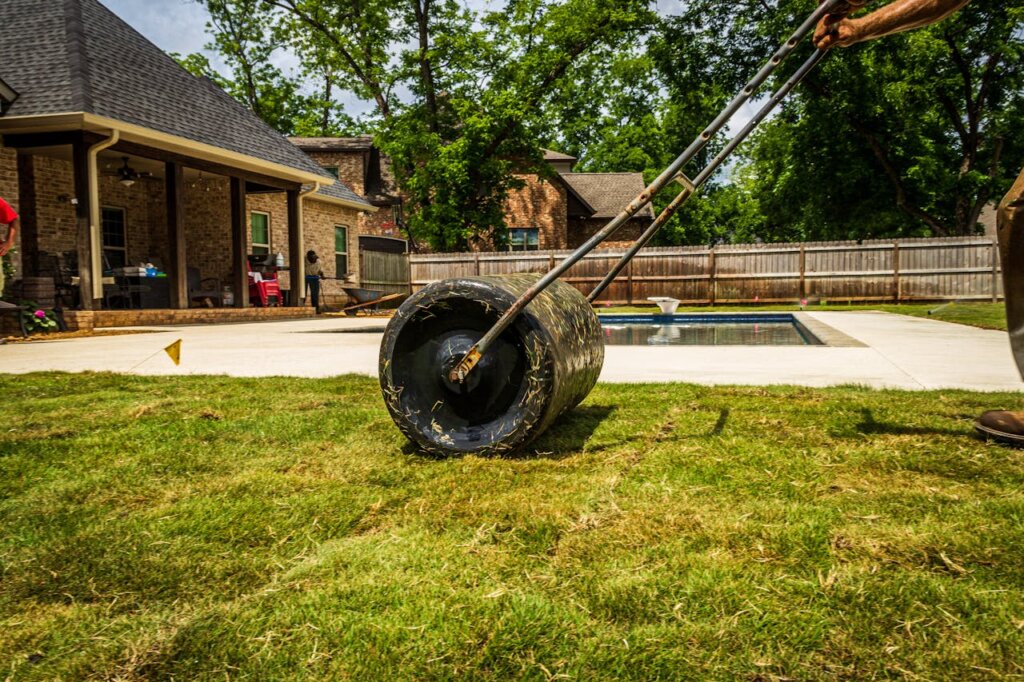
The main limitation of cushion sand in lawn leveling is its particle consistency. Because it is not finely screened, it may contain variations that affect how smoothly it spreads and settles.
This can lead to minor surface irregularities, especially if you are trying to level thin layers across an already established lawn. In these situations, finer materials perform better because they blend more naturally with the soil.
Cushion sand can also compact more tightly, which may reduce airflow and water movement near the surface. While this is not always a major issue, it can impact grass health over time if over-applied.
When You Should Use Cushion Sand
Cushion sand is a reasonable choice when the project is focused on basic leveling, especially in larger or less visible areas. It works well when filling deeper depressions or preparing ground before adding a finishing layer.
It is also a practical option when budget is a major concern and achieving a perfectly smooth lawn is not the top priority.
In these cases, using cushion sand as a base layer and finishing with a finer material can deliver better results without significantly increasing cost.
When You Should Avoid It
If your goal is a perfectly smooth, high-quality lawn surface, cushion sand alone is not the best choice. It may not provide the level of refinement needed for thin topdressing or fine leveling.
In projects where appearance, precision, and grass health are critical, investing in finer sand or a blended material will produce better long-term results.
This is especially true for visible front lawns, landscaped gardens, or premium outdoor spaces.
Final Thoughts
So, can you use cushion sand for lawn leveling? Yes—but it comes with limitations.
Cushion sand is affordable and effective for basic leveling, especially in larger areas or deeper spots. However, it does not offer the same smooth finish or soil compatibility as mason sand, which is why professionals often prefer finer materials for precision work.
The best approach depends on your priorities. If cost matters most, cushion sand can do the job. If finish quality and lawn health are your focus, a finer sand or blended mix will deliver better results.
In many cases, the smartest solution is not choosing one material over the other, but using each where it performs best.

