How Much Does a Yard of Fill Dirt Weigh?
If you’re planning a construction, landscaping, or grading project, one of the most common questions people ask is: how much does a yard of fill dirt weigh? Knowing the weight of fill dirt is essential when estimating transportation, planning delivery, or calculating how much material your project requires.
In general, one cubic yard of fill dirt weighs between 2,000 and 2,700 pounds, depending on several factors such as moisture content, soil composition, and compaction. Because fill dirt can vary in density, the exact weight may change slightly from one supplier or location to another.
For contractors, builders, and homeowners working on grading or land preparation projects, understanding these weight estimates helps ensure the right amount of material is delivered for the job.
What Is Fill Dirt?
Adding a thin layer of topsoil over existing turf—a process known as top-dressing—is a standard practice for golf courses and professional sports fields. When done correctly, it provides several long-term benefits for your lawn.
Fill dirt is a natural soil material typically used to raise ground levels, fill holes, or create a stable base for construction projects. Unlike topsoil, which contains organic matter and nutrients for plant growth, fill dirt is usually composed of subsoil with minimal organic material.
This makes fill dirt ideal for structural applications because it compacts well and provides a stable foundation.
Common uses for fill dirt include:
Land leveling and grading
Filling low areas in construction sites
Backfilling foundations or retaining walls
Preparing land for driveways, patios, or roads
Supporting landscaping projects
For projects requiring bulk materials, suppliers such as Select Sand & Gravel provide common fill dirt and other soil materials used in site preparation. You can learn more about this material here:
Average Weight of a Yard of Fill Dirt
A cubic yard is the standard measurement used in landscaping and construction material delivery.
Typical Weight Range
On average:
- Dry fill dirt: about 2,000 – 2,200 pounds per cubic yard
- Moderately moist fill dirt: about 2,200 – 2,500 pounds per cubic yard
- Wet or heavily compacted fill dirt: up to 2,700 pounds per cubic yard
Because soil can absorb water, moisture levels significantly affect the final weight.
Example Calculation
If your project requires 10 cubic yards of fill dirt, the total weight may be approximately:
- 20,000 – 27,000 pounds
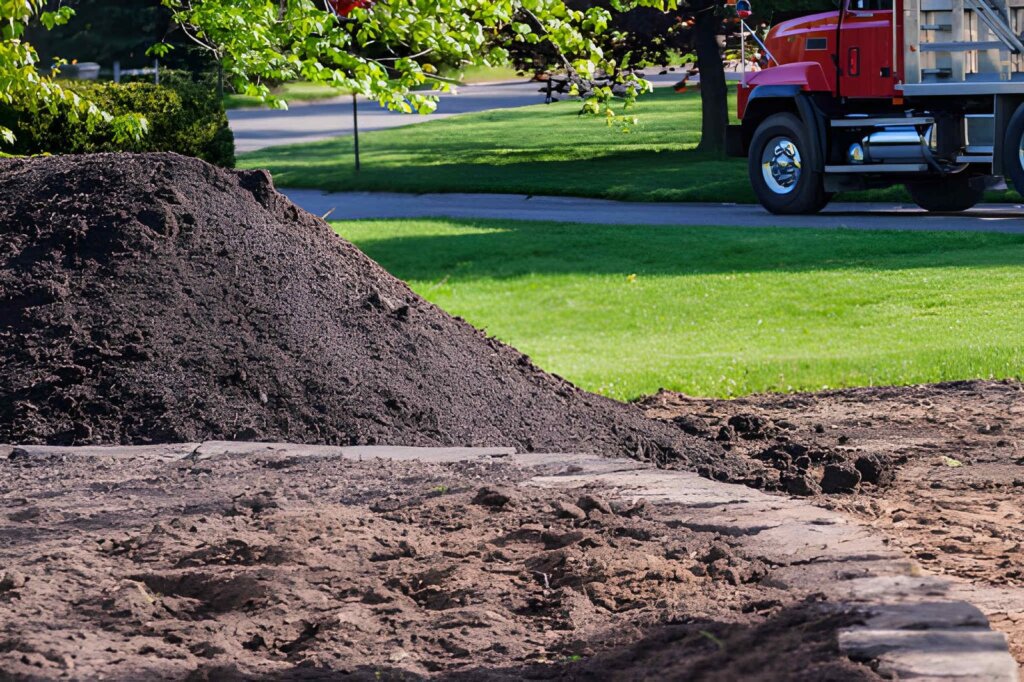
This is why professional suppliers use dump trucks or end-dump trailers designed to transport heavy bulk materials safely.
Factors That Affect the Weight of Fill Dirt
While averages are helpful, several factors influence the actual weight of fill dirt.
1. Moisture Content
Water is one of the biggest factors affecting soil weight. After rainfall or in humid environments, fill dirt absorbs moisture, which increases its density.
Wet soil can weigh hundreds of pounds more per cubic yard than dry soil.
2. Soil Composition
Fill dirt can contain different types of materials such as:
Clay
Sand
Silt
Small gravel particles
Soils with higher clay content are typically heavier and more compact, while sandy soils tend to weigh slightly less.
Understanding soil composition is important when selecting the right material for your project. For example, sandy soil blends like screened sandy loam may be used for certain landscaping and grading applications.
3. Compaction
Compacted soil weighs more because the particles are pressed tightly together, reducing air pockets.
During construction projects, contractors often compact fill dirt intentionally to create stable foundations for structures, roads, or driveways.
Materials such as road base or flex base are often used together with fill dirt to create strong, load-bearing surfaces.
4. Type of Fill Material
Not all fill dirt is identical. Some fill materials contain small rock fragments or aggregates, which can increase overall weight.
Depending on the project, contractors may combine fill dirt with crushed stone materials such as crushed limestone to improve structural stability.
Why Knowing Fill Dirt Weight Matters
Understanding the weight of fill dirt helps with several aspects of project planning.
Transportation and Truck Capacity
Dump trucks used for hauling soil have weight limits based on road safety regulations. Knowing the approximate weight ensures trucks are loaded safely and legally.
For example, a standard dump truck may carry 10–14 cubic yards of fill dirt, depending on moisture levels and truck size.
Accurate Project Estimates
Construction projects rely on precise material calculations. Estimating weight allows contractors to:
- Plan delivery schedules
- Calculate hauling costs
- Determine equipment needs
- Avoid ordering too much or too little material
Accurate estimates help keep projects on schedule and within budget.
Accurate Project Estimates
Using the correct amount of fill dirt is essential when preparing ground for construction or landscaping. Insufficient fill may lead to settling, uneven surfaces, or drainage issues over time.
Properly compacted fill dirt provides a solid base for roads, foundations, and landscaping structures.
For projects involving multiple aggregate materials, contractors often work with suppliers offering a full range of rock and gravel products.
https://selectsg.com/rock-and-gravel-products/
How Much Area Does One Yard of Fill Dirt Cover?
Coverage depends on the depth of the material.
A single cubic yard of fill dirt can cover approximately:
324 square feet at 1 inch deep
100 square feet at 3 inches deep
81 square feet at 4 inches deep
27 square feet at 12 inches (1 foot) deep
This is why most projects require multiple cubic yards of material.
Choosing the Right Fill Dirt Supplier
When ordering bulk soil materials, reliability matters. A professional supplier ensures:
Consistent material quality
Accurate measurements
Reliable delivery schedules
Access to multiple aggregate products
Select Sand & Gravel has been supplying construction and landscaping materials since the early 1980s. The company delivers sand, gravel, rock, topsoil, and fill dirt across major markets in Texas and Oklahoma.
Learn more about the company and its services.
Final Thoughts
So, how much does a yard of fill dirt weigh? In most cases, a cubic yard of fill dirt weighs between 2,000 and 2,700 pounds, depending on moisture content, soil composition, and compaction.
Understanding these weight ranges helps contractors, landscapers, and homeowners estimate transportation needs and ensure they order the correct amount of material for their project.
Whether you’re leveling land, filling low areas, or preparing a foundation, choosing high-quality fill dirt from a trusted supplier can make a significant difference in the long-term stability and success of your project.

