Does Concrete Sand Harden When Wet? What You Need to Know
When planning a construction or landscaping project, understanding how your raw materials react to the elements is essential. At Select Sand & Gravel, we frequently assist customers in Dallas, Houston, and Oklahoma City who are curious about the structural properties of their aggregates. One question that often arises during the planning phase is: “Does concrete sand harden when wet?”
While the name might suggest it has the properties of concrete, the reality is quite different. Knowing how this material behaves when exposed to moisture is key to ensuring your patio, foundation, or utility trench remains stable over time.
The Science of Concrete Sand and Moisture
To answer the primary question directly: No, concrete sand does not harden when wet. Unlike a bag of pre-mixed concrete, concrete sand does not contain a binding agent like Portland cement. Without a chemical binder, sand cannot undergo the hydration process required to turn into a solid, rock-like mass.
The Mechanical Bond of Sharp Sand
Concrete sand is often referred to as “sharp sand” because it is washed and screened to reveal coarse, angular edges. When this sand becomes wet, the water acts as a temporary lubricant, allowing the jagged grains to slide into a tighter formation. Once the water drains away or evaporates, the grains “lock” together mechanically. This results in a very firm, stable surface, but it remains a collection of individual grains rather than a single solid piece.
The Role of Surface Tension
You may notice that damp concrete sand feels much “harder” than dry sand. This is due to surface tension, or “sand castle physics.” A small amount of moisture creates bridges between the sand particles, holding them together. However, as soon as the sand dries out completely, or if it becomes oversaturated with too much water, that temporary bond disappears.
How Concrete Sand Behaves in Different Applications
Even though concrete sand doesn’t harden like cement, its reaction to water is exactly why it is so highly valued in the construction industry. Its ability to remain stable yet permeable makes it a superior choice for several specific tasks.
Bedding Layers for Pavers and Walkways
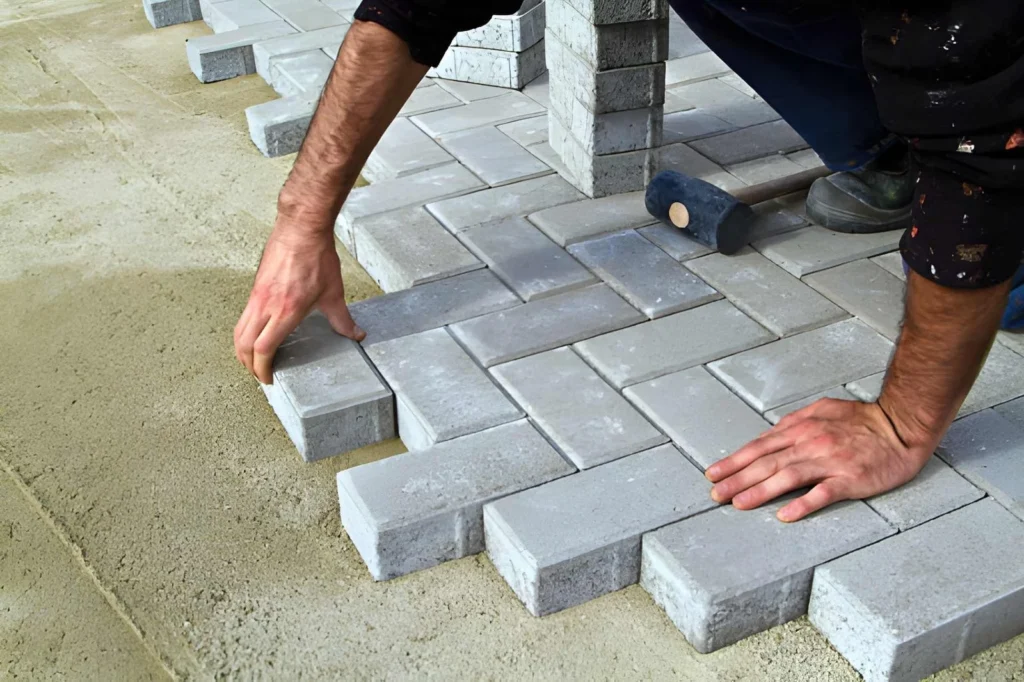
For landscaping projects in San Antonio or Austin, concrete sand is the preferred bedding layer. When you compact wet concrete sand under a patio, it creates a dense, flat “floor.” Because it doesn’t harden into a rigid slab, it allows for minor soil fluctuations without cracking. Furthermore, its coarse nature ensures that rainwater can drain through the joints and the base, preventing puddles from forming on your patio.
Utility Trenching and Drainage
In utility work, concrete sand is used to “envelope” pipes. Because it doesn’t harden, it provides a supportive but flexible environment. If the pipes need to be accessed for repairs later, the sand can be easily excavated. If the sand were to harden like concrete, it would be nearly impossible to maintain underground lines without heavy machinery.
Concrete Sand vs. Stabilized Sand
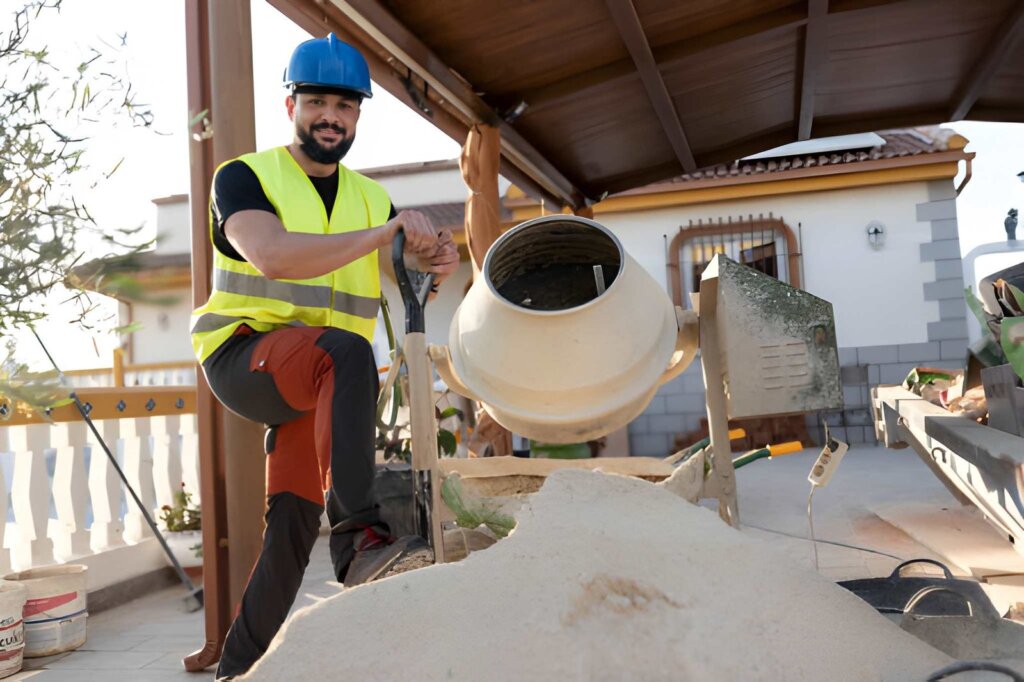
If your project requires a material that does harden when wet, you may actually be looking for Cement Treated Sand (also known as stabilized sand).
What is Stabilized Sand?
Stabilized sand is a manufactured mix of concrete sand and a small percentage of Portland cement (usually 1.5 to 2 sacks of cement per ton of sand). When this material is delivered to your site in Fort Worth or Midland/Odessa and then moistened, it will undergo a chemical reaction and harden into a low-strength concrete.
When to Choose Stabilized Sand Over Plain Sand
Stabilized sand is often used for:
- Backfilling around swimming pools.
- Pipe bedding in areas with high water tables.
- Providing a permanent, non-shifting base for high-traffic commercial areas.
Logistics and Quality Assurance with Select Sand & Gravel
At Select Sand & Gravel, we pride ourselves on being more than just a supplier; we are your project partners. Since becoming an employee-owned company in 2022, our team members in every department are dedicated to delivering the exact material you need to get the job done right.
Whether you need a Tandem Dump Truck of clean concrete sand for a residential patio or a high-volume delivery of Road Base via End-Dump Trailer, we operate with the intent to provide you with total confidence. We have the experience—dating back to the early 1980s—to help you distinguish between standard aggregates and custom orders like Decomposed Granite or Mexican Beach Pebbles.
Conclusion: Choosing the Right Base for Your Project
While concrete sand provides an incredibly stable and dense base when properly compacted and moistened, it will never harden like concrete on its own. It is designed to be a durable, permeable, and flexible aggregate that stands up to the heavy rains of the Gulf Coast and the shifting soils of North Texas.
Understanding this distinction ensures that you don’t expect a chemical bond where a mechanical one is intended. If you need a base that stays firm but allows for drainage, concrete sand is your best bet. If you need a permanent, hardened surface, ask our team about our stabilized sand options.

