What Is the Difference Between Topsoil and Garden Soil?
Walk into any garden center or search any landscaping supply site and you’ll find both topsoil and garden soil listed as separate products. They look similar, they’re often shelved next to each other, and the descriptions can sound almost identical. So what actually separates them — and does it matter which one you use?
It matters quite a bit. Using the wrong material in the wrong application can produce poor plant establishment, drainage problems, or wasted money. Here’s a clear breakdown of what each one is, how they differ, and which to use for specific projects.
What Is Topsoil?
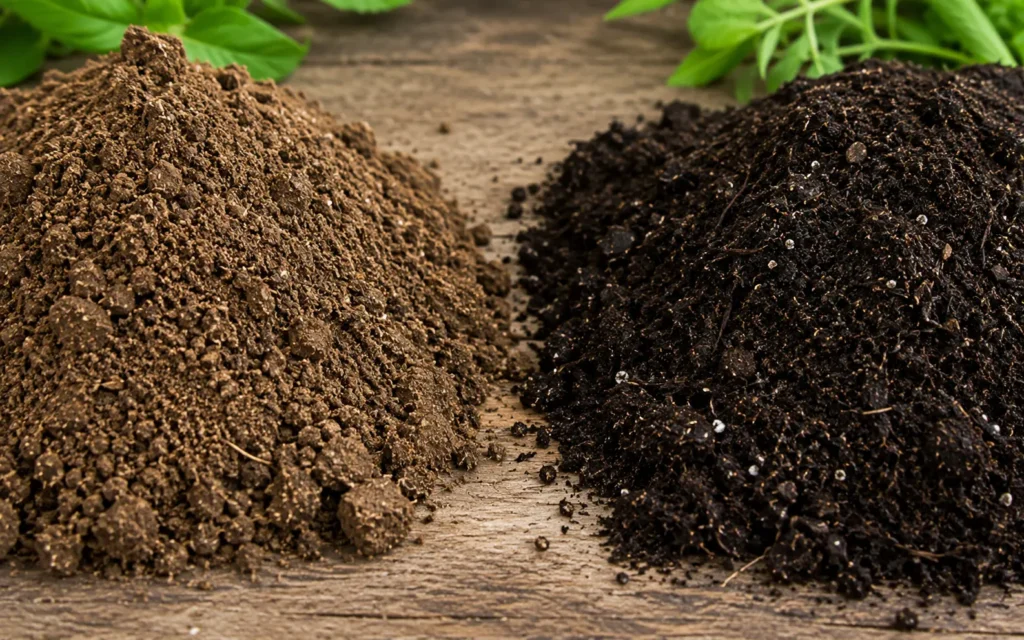
Topsoil is the uppermost layer of the earth’s surface — typically the top 2 to 8 inches of native ground before subsoil begins. It’s the layer where organic matter, microorganisms, and mineral particles are most concentrated, and where the vast majority of plant root activity takes place.
When you order bulk topsoil from a supplier, you’re getting material that was excavated from this upper soil horizon — either from a field, a development site clearing, or a dedicated topsoil operation. Quality varies significantly depending on the source.
Screened topsoil is topsoil that has been mechanically processed through a screen to remove rocks, roots, clods, and debris, resulting in a consistent, workable texture. This is the grade most commonly used for lawn installation, grading, and landscape bed preparation. Unscreened topsoil is cheaper but contains variable debris and requires more prep work on site.
Topsoil is not formulated or amended — it’s a natural soil material. What it contains depends entirely on where it came from. A good batch of screened topsoil from a loamy, organic-rich source will grow grass and plants beautifully. A batch pulled from a clay-heavy site will be dense, slow-draining, and poor for planting without amendment.
In Texas, topsoil quality varies considerably by region. DFW and Central Texas topsoil often carries a high clay component from the Blackland Prairie geology, while areas with more sandy or loamy native soils produce topsoil that’s lighter and better-draining by nature. Knowing your local soil character helps set realistic expectations for what you’re ordering.
What Is Garden Soil?
Garden soil is a manufactured product — a blend of ingredients formulated to create a specific growing environment. Unlike topsoil, which is a natural material you’re buying essentially as it comes from the ground, garden soil is engineered.
Typical garden soil blends include some combination of:
- Topsoil or a mineral soil base
- Compost or composted organic matter
- Bark fines or wood products
- Perlite, vermiculite, or coarse sand for drainage
- Sometimes fertilizer or pH amendments
The exact blend varies by manufacturer and product line. The consistent thread is that garden soil is designed for plant growth performance — optimized for nutrients, drainage, aeration, and the biological activity that roots need.
Garden soil is typically sold in bags at garden centers, though some suppliers offer bulk blended soil mixes for larger projects. The bagged versions are convenient for raised beds and container gardens but become expensive quickly when covering large areas. Bulk soil mixes serve larger installations more economically.
Topsoil vs. Garden Soil: The Key Differences
| Topsoil | Garden Soil | |
|---|---|---|
| Origin | Natural — excavated from the earth | Manufactured — blended from multiple ingredients |
| Composition | Variable — depends on source | Formulated — consistent nutrient and drainage profile |
| Organic matter content | Low to moderate (depends on source) | Higher — compost and amendments included |
| Drainage | Variable — can be clay-heavy | Improved — amended for drainage |
| Nutrient content | Low — not fertilized | Higher — amended for plant nutrition |
| Best use | Lawns, grading, fill, large-area coverage | Garden beds, raised beds, planting areas |
| Cost | Lower per cubic yard | Higher per cubic yard or bag |
| Available in bulk | Yes | Yes (bulk blends) and bags |
| Compacts over time | Yes — especially clay-heavy types | Less — organic matter resists compaction |
Which One Should You Use?
For Lawn Installation and Overseeding
Use topsoil. Grass roots are shallow and relatively undemanding — they don’t need the nutrient density and drainage optimization of a blended garden soil. Screened topsoil provides a suitable growing medium for turf at a fraction of the cost of blended garden soil, and for large lawn areas the cost difference is significant.
The key is depth. For sod installation, a minimum of 4 inches of quality topsoil over a properly graded subgrade gives grass roots the room they need to establish. For overseeding thin lawn areas, a light top-dressing of screened topsoil (1/4 to 1/2 inch) worked into the existing turf helps seed-to-soil contact without smothering the existing grass.
For Raised Garden Beds
Use garden soil or a blended soil mix. Raised beds are enclosed environments where the soil can’t draw on the surrounding native ground for drainage or microbial exchange in the same way in-ground plantings can. The contained volume needs to perform on its own — and plain topsoil in a raised bed often compacts, drains poorly, and produces disappointing results.
A proper raised bed mix — often described as a 60/40 or similar blend of compost and a mineral component like coarse sand or screened topsoil — gives roots the aeration, drainage, and nutrition they need in the limited volume of a raised bed. Using pure topsoil in a raised bed is a common and avoidable mistake.
For In-Ground Garden Beds and Planting Areas
It depends on your native soil. If your in-ground soil is reasonably loamy and well-draining, amending it with a few inches of compost tilled into the existing bed may be all you need — adding topsoil on top is unnecessary. If your native soil is heavy clay (common across much of Texas), tilling in compost and coarse sand to break up the clay structure is more effective than simply adding topsoil on top.
Garden soil or a compost-rich blend worked into the top 6–8 inches of your planting area produces the best in-ground bed results, particularly for vegetables, perennials, and annuals that respond strongly to soil quality.
For Grading, Leveling, and Filling Low Spots
Use topsoil. When the goal is to establish grade — building up low areas, smoothing a lawn surface, filling around a new structure — volume and cost efficiency matter more than nutrient content. Topsoil covers the functional need at the right price point. Garden soil is an unnecessary expense when the application is structural rather than horticultural.
For deep fills (more than a few inches), fill dirt handles the bulk volume work and topsoil covers the final 4–6 inches to create a plantable surface. Using garden soil for grading and fill is cost-inefficient.
For Landscaping Beds Around Established Plants and Shrubs
Topsoil works for volume; garden soil or compost works for performance. If you’re building up a large landscape bed from scratch, bringing it to grade with topsoil and topping with a few inches of compost or garden soil blend gives you cost-effective volume plus the surface quality that plant establishment benefits from. Pure topsoil for the entire depth is fine for most landscape shrubs and trees, which are less demanding than vegetables and annuals.
A Word on Topsoil Quality in Texas
Not all topsoil is equal, and in Texas specifically the variation is wide enough to affect your decision significantly.
Much of the topsoil available across DFW, Austin, and Central Texas carries a high clay fraction — which makes it heavy, prone to compaction, and slow-draining when wet. This isn’t necessarily a problem for lawn installation where you’re spreading a relatively thin layer over a graded subgrade, but it can be limiting for garden bed applications where plants need better drainage and aeration.
Screened sandy loam — a topsoil variant with a higher sand fraction and better natural drainage — is often the better specification for Texas landscape beds and lawn installations on sites with heavy clay subgrade. The lighter texture stays workable through wet-dry cycles and doesn’t compact as severely as clay-dominant topsoil.
Knowing what you’re ordering — and asking your supplier about the source and composition — saves frustration after delivery. A reputable bulk topsoil supplier can tell you whether the material leans clay, loam, or sandy, which guides how you use it.
Can You Mix Topsoil and Garden Soil?
Yes — and for many applications, blending the two is the practical approach. Topping a bulk topsoil base with a layer of garden soil or compost, then tilling the two together, creates a workable growing medium at a lower cost than using pure garden soil throughout. This works well for:
- In-ground vegetable gardens
- New landscape beds being built from scratch
- Lawn areas with poor native soil being renovated
The proportion depends on your application, but a general approach of 70% screened topsoil and 30% compost or garden soil blend — tilled together — produces a good all-purpose planting medium for most Texas landscape and garden applications.
The Bottom Line
Topsoil is a natural material suitable for lawns, grading, fill, and large-scale landscape coverage where cost efficiency and volume matter. Garden soil is a formulated product designed for maximum plant performance in confined growing environments — raised beds, container gardens, and small planting areas where the soil needs to do all its work in a limited space.
For most Texas homeowners and landscapers, screened topsoil handles the majority of outdoor soil needs at a practical price point — with garden soil or compost amendment reserved for the beds and areas where plant performance is the priority.

