Can You Use Concrete Sand Under a Pool?
Installing an above-ground pool requires careful preparation of the ground beneath it. The base material plays an important role in protecting the pool liner, maintaining stability, and preventing uneven settling over time. One common question homeowners ask is: can you use concrete sand under a pool?
The answer is yes, concrete sand can be used under some types of pools, but it is not always the best choice for every installation. While concrete sand offers excellent compaction and stability, its coarse texture may not provide the smooth cushioning effect that many pool manufacturers recommend.
Choosing the right sand depends on the type of pool, the condition of the ground, and whether the material is being used as a structural base or a protective layer beneath the liner.
Why Sand Is Used Under Above-Ground Pools
Sand is commonly installed beneath above-ground pools because it provides a smooth, protective layer between the pool liner and the ground.
A properly prepared sand base helps:
- protect the liner from rocks, roots, and sharp objects,
- create a level surface,
- reduce pressure points,
- and provide a softer feel underfoot.
However, not all sand performs the same way. The texture, particle size, and compaction characteristics determine whether it is suitable for pool installation.
What Is Concrete Sand?
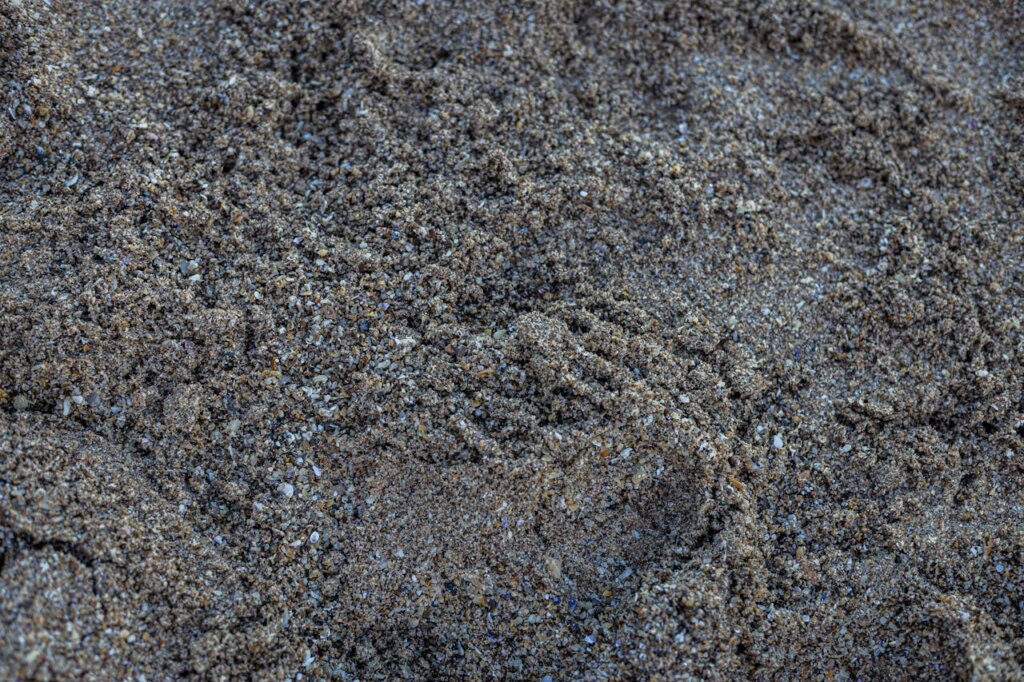
Concrete sand is a coarse, washed sand typically used in construction applications.
It is made by processing natural or crushed materials to achieve a specific particle size and cleanliness. Unlike very fine sands, concrete sand has larger, angular particles that provide good stability and drainage.
Materials such as concrete sand are commonly used for concrete mixes, paver installations, and construction bedding because the particles lock together effectively.
This same characteristic makes concrete sand strong—but it can also make it less ideal as the only layer directly beneath a pool liner.
Is Concrete Sand Safe Under a Pool Liner?
Concrete sand is generally safe under a pool when properly installed, but there are a few considerations.
The coarse particles in concrete sand create a firm base, but they may not provide the same smooth cushioning effect as finer pool-grade sands. If the sand contains larger particles, sharp edges, or inconsistent grading, it could potentially create pressure points against the liner.
For this reason, many pool installers prefer finer materials such as masonry sand or specially screened pool sand for the final layer directly beneath the liner.
If concrete sand is used, it should be clean, evenly graded, and free from rocks or debris.
Concrete Sand vs Mason Sand Under a Pool
The biggest comparison homeowners make is concrete sand vs mason sand for pool installation.
Concrete sand is coarser and provides stronger compaction. It is better suited for structural support and applications where stability is important.
Mason sand is much finer and smoother. Its smaller particles create a softer, more uniform surface, making it more comfortable and suitable for direct contact with pool liners.
For many above-ground pools, mason sand is preferred because the goal is not only stability but also protection of the liner.
However, concrete sand can still be useful as part of the overall base system, especially when combined with proper preparation.
Can Concrete Sand Prevent Pool Settling?
Concrete sand alone cannot prevent settling if the ground underneath is not properly prepared.
The strength of a pool base comes from the entire installation process, including excavation, grading, compaction, and drainage.
If the soil beneath the pool is soft, uneven, or poorly compacted, even the best sand will eventually move.
In some installations, a stronger foundation layer such as compacted aggregate or road base flex base may be used beneath the sand layer to improve stability.
The sand then serves as a finishing layer rather than the primary structural support.
What Type of Sand Is Best Under a Pool?
The best sand depends on the pool type and installation requirements.
For many above-ground pools, fine washed sand or mason sand is commonly recommended because it creates a smooth surface that protects the liner.
Concrete sand may be appropriate when:
- the manufacturer allows it,
- the sand is properly screened,
- the surface will be covered with an additional protective layer,
- or it is being used as part of a larger base system.
The most important factors are cleanliness, consistency, and proper installation.
How Thick Should the Sand Layer Be Under a Pool?
The recommended sand depth varies depending on the pool design, but many above-ground pool installations use approximately 2 to 4 inches of sand beneath the liner.
A layer that is too thin may not provide enough protection, while an excessively thick layer can become unstable if not compacted properly.
The sand should be spread evenly and carefully leveled before pool installation.
A perfectly flat surface is much more important than simply adding extra material.
Common Mistakes When Using Sand Under a Pool
One common mistake is installing sand directly over uneven soil without proper preparation.
Another issue is using sand that contains rocks, debris, or inconsistent particle sizes. These materials can create weak spots or damage the liner.
Some homeowners also assume that more sand always means a better base. In reality, excessive sand depth can lead to shifting unless it is properly compacted.
The goal is to create a smooth, stable, and protective surface—not simply a thick layer of sand.
Final Thoughts
So, can you use concrete sand under a pool? Yes, but it depends on how it is being used and the requirements of your specific pool installation.
Concrete sand provides excellent stability and compaction, but its coarser texture may not make it the best choice as the final layer directly beneath a pool liner. Many installations benefit from using finer sand, such as mason sand, for a smoother protective surface.
If you choose concrete sand, make sure it is clean, properly graded, and installed over a well-prepared base. Selecting the right material and preparing the site correctly will help your pool remain level, stable, and protected for years.

