Is Crushed Concrete Good for Drainage?
Crushed concrete is widely used in construction and landscaping, and many property owners ask whether it is good for drainage. The short answer is yes—crushed concrete can be an effective drainage material because of its coarse texture, permeability, and ability to allow water to move through the surface while maintaining structural stability.
This recycled aggregate is commonly used in driveways, road base layers, foundation support, and drainage systems where proper water flow is essential. When installed correctly, crushed concrete helps prevent water buildup, reduces erosion, and improves ground stability in both residential and commercial projects.
Why Crushed Concrete Works Well for Drainage
Crushed concrete is made by breaking down old concrete into smaller angular pieces, which creates spaces between the particles. These gaps allow water to pass through easily instead of pooling on the surface. This makes it suitable for areas that require water management, such as drainage layers, pathways, and foundation backfill.
High-quality materials like crushed concrete are often used because they compact well while still allowing water to move through the structure. This balance between stability and permeability makes it a practical solution for many drainage-related applications.
Common Drainage Applications
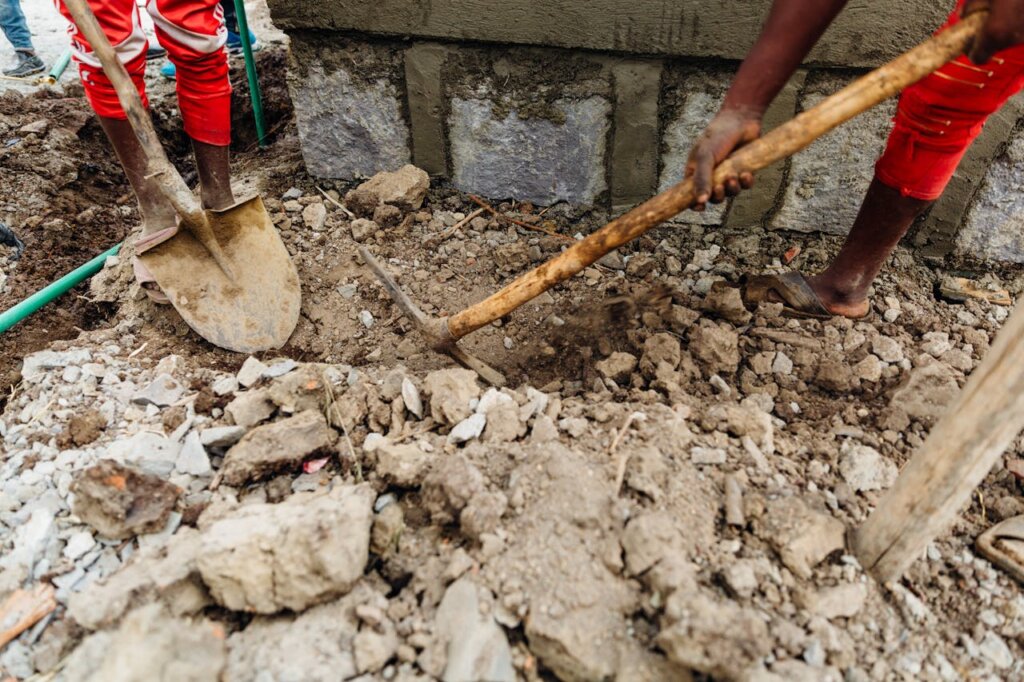
Crushed concrete is frequently used in projects where controlling water flow is important. It is often placed under driveways, walkways, and patios to create a stable base that allows water to drain naturally into the ground. Contractors also use it in French drains, trench backfill, and around foundations to reduce moisture buildup.
In landscaping, crushed concrete helps prevent muddy surfaces and supports proper grading. It is also commonly used alongside other aggregates found in rock and gravel products to improve drainage performance across larger project areas.
Advantages Compared to Other Materials
One of the main advantages of crushed concrete is that it is both cost-effective and environmentally friendly. Because it is a recycled material, it is often more affordable than natural stone while still providing strong drainage performance. It also compacts well, which helps create a stable surface that can support traffic and heavy loads.
Compared to fine sand or soil, crushed concrete allows much better water movement. Fine materials tend to hold moisture, which can lead to pooling or erosion, while crushed concrete promotes steady drainage and long-term durability.
When Crushed Concrete May Not Be Ideal
Although crushed concrete works well for drainage, it is not always the best option for every situation. Areas that require decorative finishes or smooth surfaces may benefit more from gravel or river rock. In addition, projects that need high filtration, such as specialized drainage systems, may require multiple aggregate layers.
Choosing the right material depends on the project requirements, soil conditions, and expected water flow.
Final Thoughts
Crushed concrete is a reliable and practical choice for drainage because it allows water to pass through while maintaining a strong and stable surface. It is commonly used in driveways, foundations, landscaping, and construction projects where proper water management is essential.
By using quality materials and working with an experienced supplier like Select Sand & Gravel, property owners and contractors can ensure efficient drainage, long-lasting performance, and cost-effective project results.

