How Deep Should Decorative Rock Be? The Ultimate Landscaping Guide
When starting a new landscaping project, choosing the perfect stone is only half the battle. Once you’ve selected a beautiful landscape rock, the next critical question is: how deep should decorative rock be?
Getting the depth right is a balancing act. If you spread the rock too thin, you’ll see the underlying soil or landscape fabric, allowing weeds to penetrate easily. If you go too deep, you are overspending on materials and making the surface difficult to walk on.
At Select Sand & Gravel, we’ve been the trusted sand and gravel supplier for Texas and Oklahoma for over 40 years. We’ve seen every type of project, from San Antonio xeriscaping to Dallas garden borders. Here is our expert breakdown of the ideal depths for decorative aggregates.
The General Rule of Thumb for Rock Depth
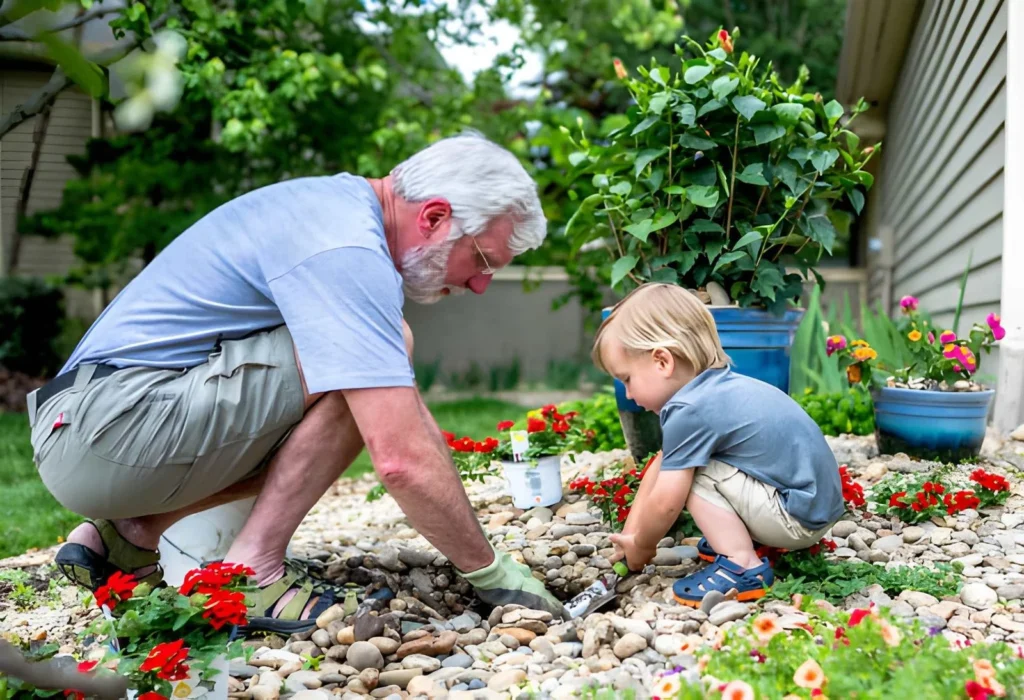
For most residential and commercial landscaping applications, the standard recommendation for decorative rock depth is 2 to 3 inches.
However, this “standard” changes based on the size of the aggregate you choose. A good rule to follow is that the depth should be at least twice the size of the stone to ensure full coverage without gaps.
Depth by Stone Size
Small Stones (1/2″ or smaller): For materials like pea gravel or granite sand, a depth of 2 inches is usually sufficient for a clean, uniform look.
Medium Stones (1″ to 2″): For classic river rock or black basalt, you should aim for a depth of 3 to 4 inches.
Large Stones (3″ and up): If you are using larger Texas river rock or cobblestones, you may need to go 5 to 6 inches deep to prevent the base layer from showing through the gaps.
Factors That Influence How Deep You Should Spread Rock
While the sizes above provide a baseline, the specific “why” behind your project will dictate your final depth requirements.
1. Weed Prevention and Ground Cover
If your primary goal is to suppress weeds, depth is your best friend. Even with high-quality landscape fabric, a thin layer of rock will eventually shift, exposing the fabric to sunlight which can lead to degradation. A 3-inch layer provides enough “weight” to keep the fabric in place and blocks the sunlight that dormant weed seeds need to germinate.
2. Foot Traffic and Stability
Are you building a walkway or a seating area?
Walkways: If you go too deep (over 3 inches) with small stones like decomposed granite, it can feel like walking through beach sand—your feet will sink. For paths, we recommend a 2-inch layer of decorative stone over a compacted road base for maximum stability.
Driveways: For areas supporting vehicles, depth is less about “decor” and more about structure. You’ll want a thicker base of crushed limestone or recycled asphalt before topping it with your decorative choice.
3. Drainage and Erosion Control
In areas with heavy rainfall, such as Houston, thin layers of rock can easily wash away. Using a deeper layer (4 inches+) of heavier stone like riprap or gabion rock in drainage swales helps slow down water runoff and prevents soil erosion.
Calculating How Much Rock You Need
Once you’ve determined that you need, for example, a 3-inch depth for your Arizona river rock, how do you translate that into a bulk order?
The math for landscape coverage is typically done in cubic yards. The formula is:
(Square Footage × Desired Depth in Inches) ÷ 324 = Cubic Yards Needed
At Select Sand & Gravel, we simplify this for you. Whether you need a stone and rock supplier in Houston or bulk stone in Austin, our team can help calculate your exact tonnage based on your measurements to ensure you don’t over-order.
Coverage Guide (Approximate)
| Depth | Coverage per Cubic Yard |
| 1 inch | 324 square feet |
| 2 inches | 162 square feet |
| 3 inches | 108 square feet |
| 4 inches | 81 square feet |
Pro-Tips for Installing Decorative Rock
As an employee-owned company that prides itself on “delivering as promised,” we want your DIY or professional project to look its best.
- Prep the Base: Before the rock arrives, ensure your topsoil is leveled and cleared of large debris. If you are dealing with uneven terrain, consider using fill dirt to create a smooth subgrade.
- Use Edging: To keep your 3-inch layer of Mexican pebble or pea gravel from migrating into your lawn, install a sturdy edging material.
- Account for Settling: Over the first few months, stone will naturally settle. It is often wise to order about 10% more than your calculated depth to account for this compaction.
Why Quality and Consistency Matter
When you order from a specialized supplier, you get consistency in “graduation” (the size of the stones). If your rock and gravel products are inconsistently sized, it becomes nearly impossible to maintain an even depth, leading to a “lumpy” appearance in your landscape.
Whether you are looking for sand and gravel in Oklahoma City or Fort Worth, we ensure that the material we deliver matches your specifications exactly.
Conclusion: Setting the Foundation for a Beautiful Landscape
Answering the question “how deep should decorative rock be” is the first step toward a low-maintenance yard. By sticking to the 2 to 3-inch rule for standard gravels, you’ll ensure beauty and weed suppression. For more tips on soil preparation, see our topsoil buying guide in Texas.
Ready to transform your property? From screened sandy loam for garden beds to landscape rock, Select Sand & Gravel is here to help.
Contact us today to schedule a delivery in Dallas, Houston, Austin, San Antonio, or Oklahoma City!

